Qualifying for Major Horse Races
In the world of horse racing, the allure of prestigious events such as the Kentucky Derby or the Epsom Derby attracts significant attention. However, the pathway to these renowned races is not open to every horse in the circuit. There are specific qualifications and criteria in place to ensure that only the most capable runners compete on the day. These standards help maintain the integrity and reputation of the race while also providing a fair competition for the contenders. Understanding the qualifying protocol is crucial for anyone involved in this sport, as it outlines the essential expectations and prerequisites for participation.
Age and Gender Requirements
One of the primary criteria for entering major horse races revolves around age and gender. For example, entry to the Kentucky Derby is exclusive to three-year-old horses. This means that each competitor is in a similar stage of development, allowing for equitable assessment of capability. The same principle applies to the Epsom Derby and the Epsom Oaks; the former is open to three-year-old colts, while the latter caters to fillies. These restrictions aim to create a balanced field where horses compete against those of similar physical maturity and experience. This setup enhances the race’s competitive nature and ensures the focus remains on skill rather than age or gender advantages.
Racing Records and Points System
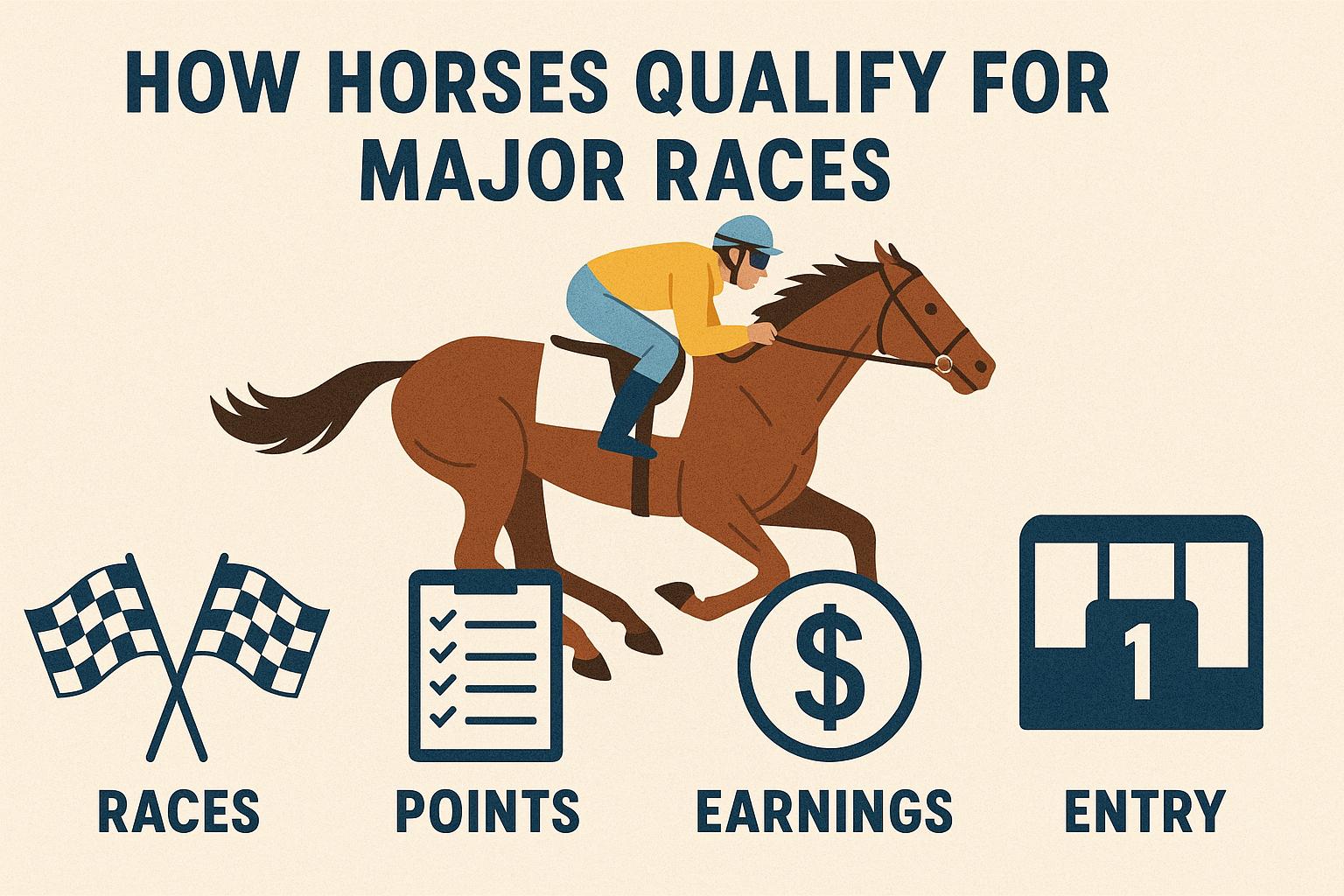
The evaluation of a horse’s eligibility often involves analyzing its racing record. This includes participation in a series of designated “prep races,” where the horse’s performance is systematically tracked. Typically, these races operate on a points system, awarding points depending on finishing positions. By accumulating enough points, a horse can qualify for more prominent races. This racing record requirement guarantees that only horses that have demonstrated consistent performance in competitive environments are allowed to participate in major events. The points system adds an additional layer of competition during the pre-race season, elevating the overall standard of horse racing.
Stakes and Grading System
Another integral part of qualifying for major races is the stakes and grading system. Horses often need to compete in graded stakes races, which are seen as an indicator of the highest quality and level of competition. These graded stakes are categorized into Grade 1, Grade 2, and Grade 3, with Grade 1 being the most prestigious. Participation and success in these races are heavily weighted in determining a horse’s eligibility for significant events. Alongside enhancing a horse’s recognition, performance in graded stakes races affects its ranking within the racing community. Consequently, these events serve as both a proving ground and a major contributor to a horse’s reputation and standing.
Condition and Fitness
Although not a formal requirement, a horse’s physical condition and fitness play a critical role in determining its readiness for major races. Prior to competition, horses undergo thorough health evaluations conducted by veterinarians and training staff. These assessments ensure that a horse is in optimal physical condition, reducing the risk of injury during high-stakes races. Monitored training sessions further assess a horse’s stamina and overall capability. The importance of fitness cannot be underestimated, as it not only affects performance but also the decision of trainers to enter a horse into a race. Consequently, trainers are likely to prioritize the fitness of their horses, only choosing to race those in peak condition.
Entry Fees and Nominations
Entering a premier horse race also involves financial considerations, specifically entry fees and nominations. Owners are usually required to nominate their horses well in advance of the event. This process involves paying a substantial fee, essentially reserving a preliminary spot in the race. Moreover, consistent with this financial aspect, failing to adhere to nomination deadlines or abide by financial commitments can result in disqualification. The entry fees serve as a confirmation of an owner’s belief in their horse’s abilities, as well as a financial commitment to the competition. Therefore, the nomination not only indicates readiness to compete but also showcases the owner’s dedication and investment in their horse’s racing career.
Conclusion
In conclusion, qualifying for major horse races requires navigating a complex set of criteria and standards. These involve a combination of age restrictions, demonstrable performance on the track, and adherence to financial obligations. While these requirements might vary slightly depending on the specific race or location, the core principles remain constant. For horse owners and trainers, careful planning and understanding of these qualifications are essential to positioning their horses for success. These qualifications ensure that events maintain their prestige and attract only competitors that truly merit their position. For those seeking additional precision on the qualifications for each race, further details can typically be found on the official websites of these events.