Introduction to Thoroughbred and Quarter Horse Racing
Thoroughbred and Quarter Horse racing represent two distinct yet equally fascinating areas in the world of horse racing. Each discipline portrays its unique characteristics and historical significance throughout the years. In this exploration, we delve deeper into the breed characteristics, styles of racing, and cultural importance attached to both Thoroughbred and Quarter Horse racing. For those eager to grasp a better understanding of these exciting equestrian events, it’s essential to recognize how breed variety, racing tactics, and cultural resonance play pivotal roles in shaping these experiences.
Breed Characteristics
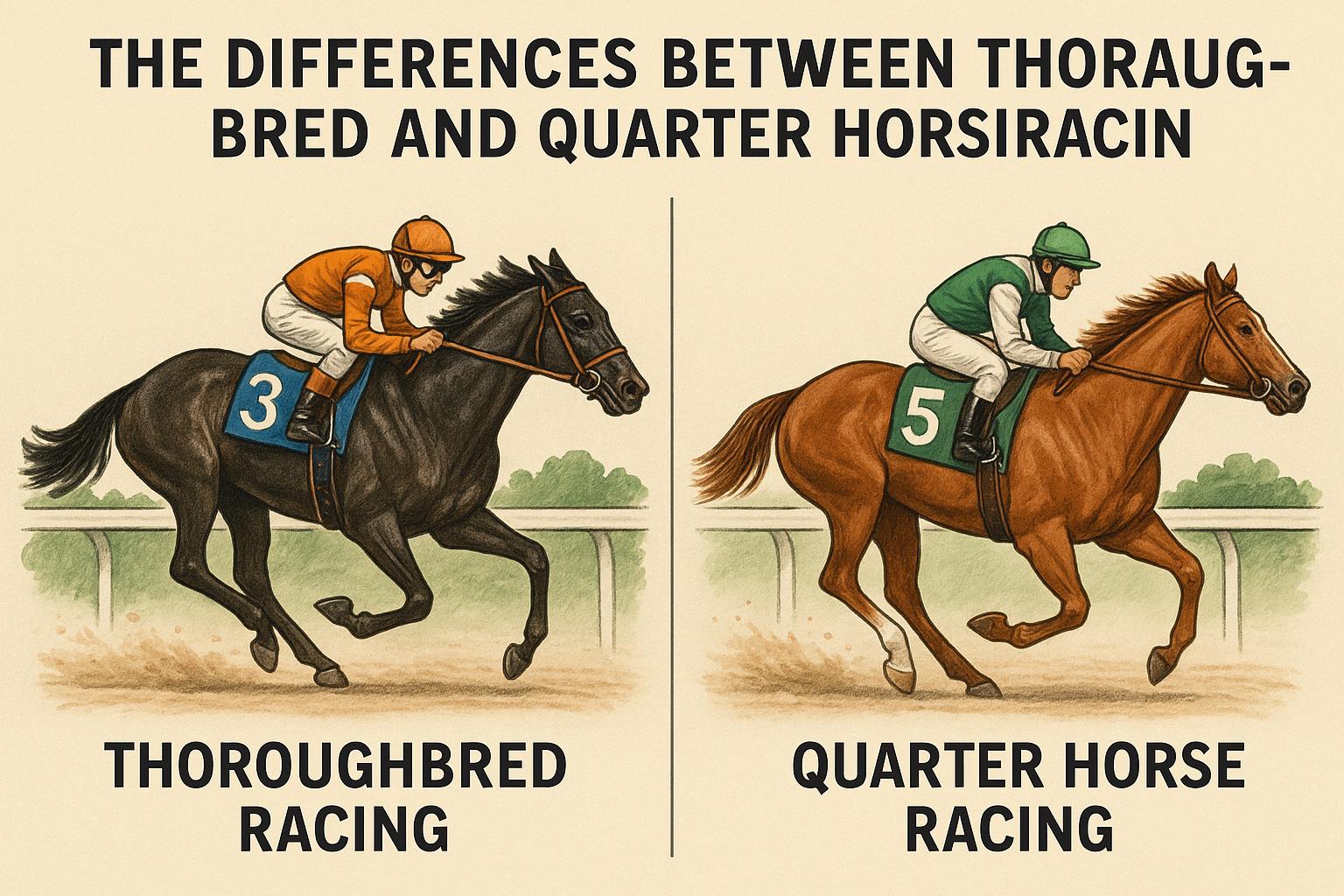
Thoroughbred Horses: Thoroughbreds are quintessential athletes, known for their exceptional stamina and speed, attributes that become more pronounced over longer distances. This breed emerged in England during the 17th and 18th centuries as a fusion of Arabian, Barb, and Turkoman horses. Over time, breeders meticulously refined these characteristics to produce a taller and leaner horse suitable for sustained endurance. Thoroughbred races are typically held over distances ranging from one mile to slightly more than two miles. As a result, their inherent genetic qualities make Thoroughbreds particularly well-suited for enduring the physical demands of these races.
Quarter Horses: Quarter Horses present a striking contrast to their Thoroughbred counterparts. Originating from the United States, they displayed another aspect of equine prowess—sheer speed over short distances. The name “Quarter Horse” stems from their ability to outpace other horse breeds over a quarter of a mile. Compact and muscular in build, Quarter Horses focus their power on short bursts of speed rather than prolonged endurance. Their conformation, which includes a wide chest and powerful hindquarters, contributes significantly to their ability to sprint at incredible speeds.
Racing Style
Thoroughbred racing exudes a sense of refined elegance and tradition. The events often take place on turf or dirt tracks and require longer distances to cover. Successful jockeys employ tactical prowess to pace their horses strategically, capitalizing on their thoroughbred’s endurance. Some of the most iconic Thoroughbred races, such as the illustrious Kentucky Derby in the United States and the Royal Ascot in England, attract global audiences and are steeped in history, pageantry, and prestige.
Conversely, Quarter Horse racing revolves around pure speed and rapid acceleration. These races typically occur on straight dirt tracks and cover shorter distances, generally up to 870 yards. Racing in this format demands explosive power, with races often concluded in a matter of seconds. The United States serves as the hotspot for this type of racing, especially in states like Texas and Oklahoma, where races draw significant attendance and generate notable community involvement.
Cultural Significance
Thoroughbred racing enjoys a reputation for international recognition and status. Its events are often linked with notions of high fashion and opulence, capturing attention not only as a sport but also as a social spectacle that includes luxurious gatherings and significant investments. The elegance and sophistication surrounding Thoroughbred racing contribute to its wide appeal, attracting spectators who relish the blend of tradition and modern entertainment.
In contrast, Quarter Horse racing firmly roots itself in American cultural heritage, with origins stretching back to colonial times. Providing local communities with entertainment and fostering a spirited aesthetic, Quarter Horse racing has sustained its place in American life for decades. It promotes a family-friendly atmosphere, where individuals of all ages can partake in the communal spirit and excitement that surrounds each race. This deep-seated community connection keeps the tradition alive, encouraging new generations to participate and appreciate the art of Quarter Horse racing.
Conclusion
In conclusion, Thoroughbred and Quarter Horse racing captivate audiences by offering distinct experiences built upon particular breed characteristics, racing styles, and cultural impacts. Each discipline offers unique insights into the amazing skills and attributes that horses display, highlighting both endurance and speed on the racing track. Appreciating these differences allows for a richer understanding of the sport and the myriad forms of human-equine interactions it encompasses. For further exploration into the intriguing world of horse racing and its historical importance, enthusiasts are encouraged to seek additional resources online and participate in this vibrant facet of equestrian culture.